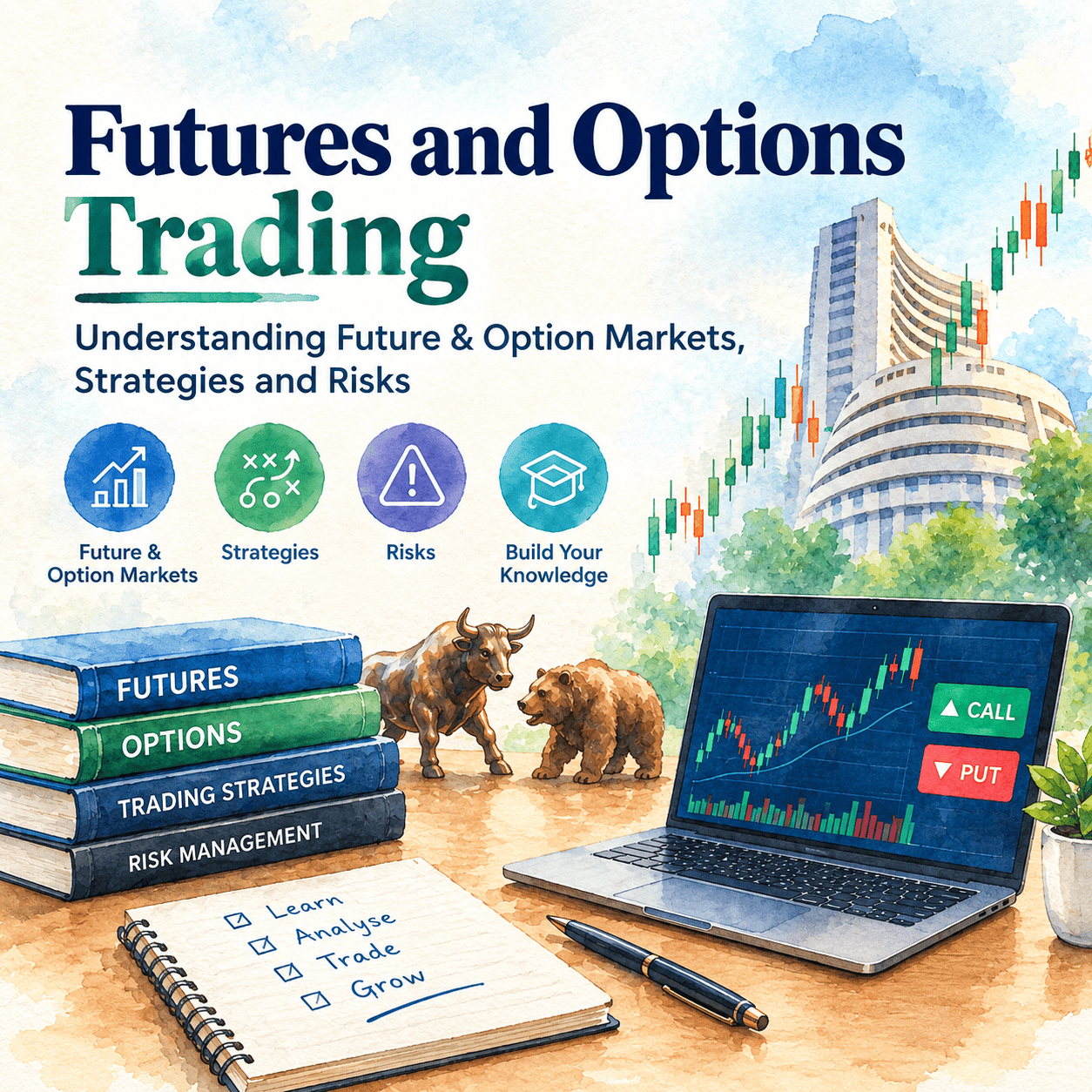
Futures and Options Trading: Understanding F&O Markets, Strategies and Risks
Futures and options have become an important part of India’s financial markets. Commonly referred to as F&O trading, futures and options allow market participants to take positions based on expected price movements or manage existing market risks.
However, derivatives are considerably more complex than simply buying and holding shares.
Before exploring F&O trading strategies, it is important to understand how these instruments work, where their risks come from, and why disciplined risk management matters.
Futures and Options Trading: How Does it Work?
Futures and options trading involves derivative contracts, meaning their value is derived from an underlying asset such as a stock, index, or commodity.
According to SEBI’s investor education resources, a futures contract is a standardised exchange-traded agreement to buy or sell an underlying asset at a predetermined price on a future date. An options contract, on the other hand, gives the buyer the right but not the obligation to buy or sell the underlying asset at a predetermined price or date.
Understanding Futures
When entering into a futures contract, both parties take on an obligation under the contract. Futures are typically traded using margin, meaning traders do not necessarily pay the entire contract value upfront.
How Do Options Work?
Options introduce another layer of flexibility.
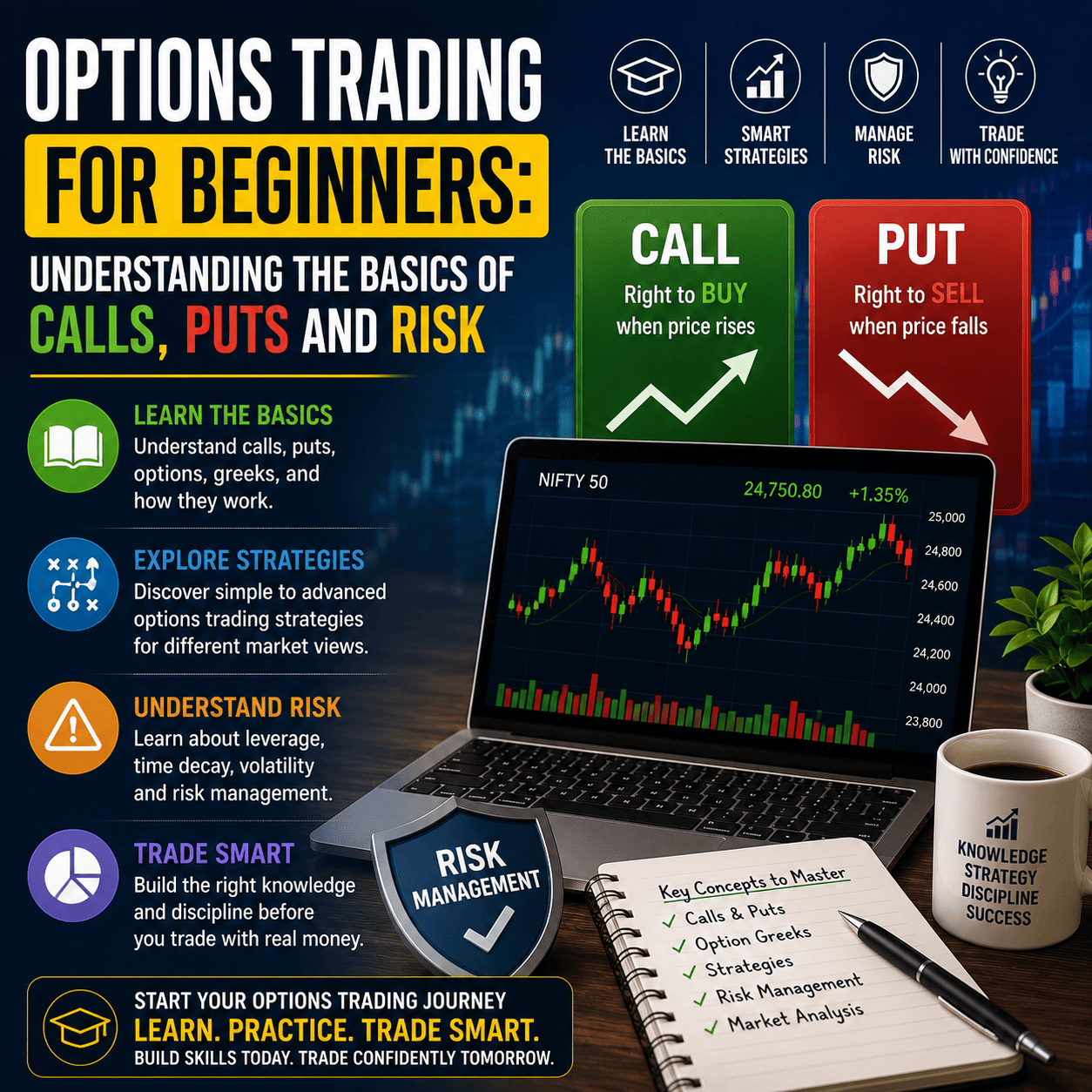
A call option gives the buyer the right to buy the underlying asset at an agreed strike price, while a put option gives the buyer the right to sell it.
The option buyer pays an upfront amount known as the premium for this right.
For an option buyer, the direct loss on the option position is generally limited to the premium paid. However, option sellers or writers can face substantially greater risk depending on the position and market movement.
Those beginning with futures and options basics should therefore understand concepts such as strike price, premium, expiry, volatility, and option Greeks before moving towards advanced strategies.
Common F&O Trading Strategies and Their Uses
Derivatives are used in financial markets for:
- Hedging: Investors and institutions may use derivatives to reduce exposure to adverse price movements in an existing portfolio.
- Speculation: Traders may take F&O positions based on their expectations.
- Arbitrage: Market participants may attempt to benefit from temporary price differences between related instruments or markets.
What Are the Major Risks of F&O Trading?
Understanding risk is arguably more important than understanding potential returns.
One of the biggest risks associated with derivatives trading is leverage. SEBI notes that because the amount required to enter certain derivative positions can be relatively small compared with the value of the underlying exposure, both profits and losses can become magnified.
- Market Risk: Prices can move rapidly against a trader's position.
- Time Decay: An option's time value generally reduces as it approaches expiry.
- Volatility Risk: Changes in expected market volatility can affect option premiums.
- Margin Risk: Certain positions require margins that may change depending on market conditions.
- Liquidity Risk: Some contracts may be difficult to exit efficiently at the desired price.
Build Your Market Knowledge Before You Trade
Successful participation in financial markets requires more than knowing whether prices may move up or down. Traders need to understand market structure, technical and fundamental analysis, derivatives, risk management, and the practical application of trading concepts.
FinX Institute's Certified Market Expert (CMX) certification is a 120-hour program designed for learners interested in stock trading and investing. The program combines theoretical concepts with practical market learning and is suitable for graduates, working professionals, and individuals interested in developing their understanding of financial markets.
Take the Next Step
Understanding futures and options trading starts with learning the fundamentals before applying strategies in live markets.
If you want to build structured knowledge across stock markets, trading, investing, and related market concepts, explore the Certified Market Expert (CMX) Certification by FinX Institute.
Explore CMX and start building your market knowledge today.
Visit: finxinstitute.com | Call: 1800 892 9030 | Email: Finxinstitute Training