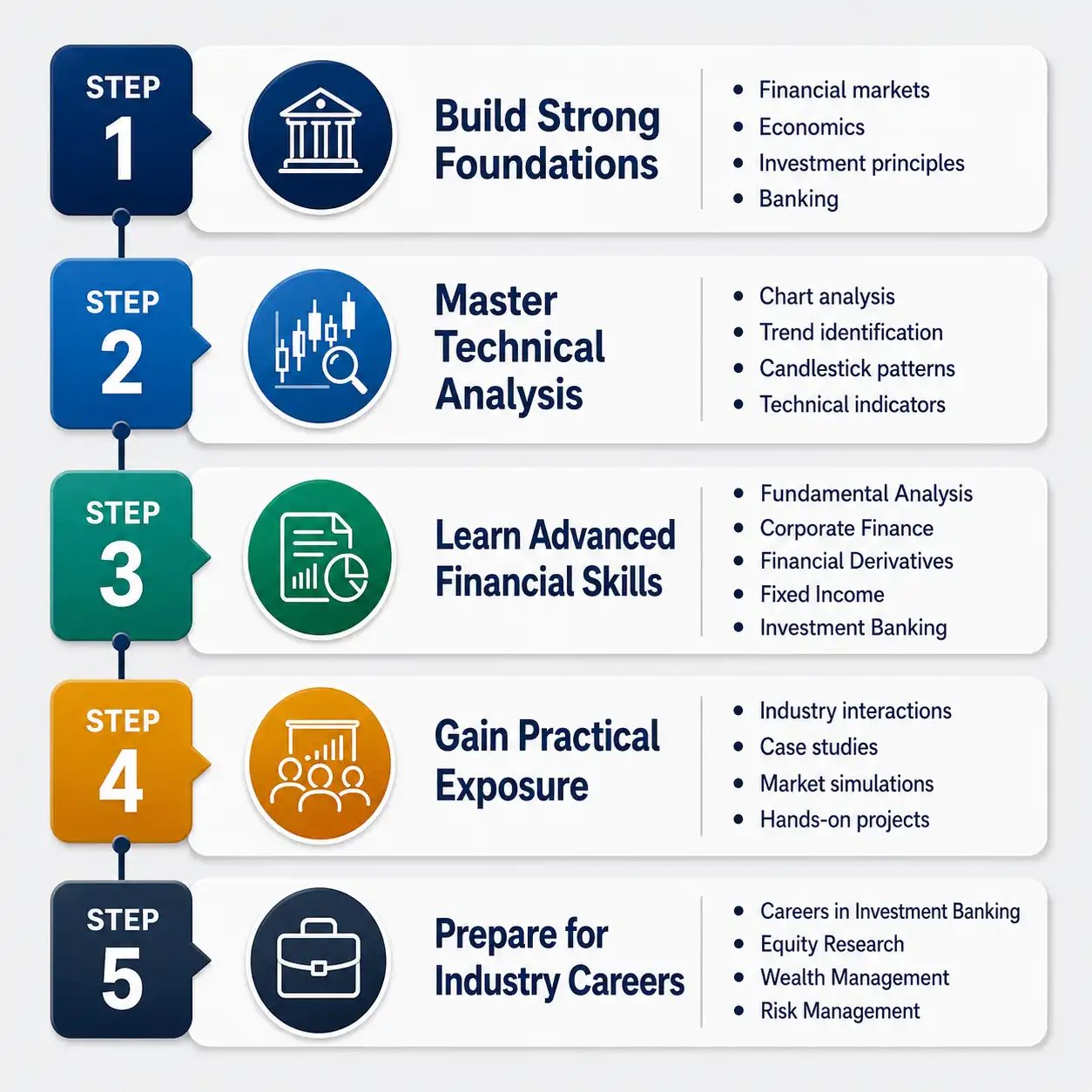
From Learning Technical Analysis to Leading in Global Financial Markets: Your Career Roadmap
Introduction
The only constant in the financial industry has been the dramatic, continuous evolution over the past decade. Today's finance professionals are expected to do much more than understand market basics; they need analytical skills, practical exposure, technological awareness, and a global perspective. Whether your goal is to become an equity analyst, investment banker, portfolio manager, trader, or financial consultant, your journey begins with building a strong foundation.
One of the first and most valuable skills every aspiring finance professional should learn is Technical Analysis. Understanding financial market trends, price behaviour, and investor psychology enables professionals to make informed decisions in today's fast-moving financial market. However, technical analysis is only one step toward building a successful career.
If you aspire to work in the global financial market, you need an education that combines technical expertise, practical learning, industry exposure, and professional development. This is where a structured postgraduate programme like the Master in Management Studies (MMS) in Global Financial Markets from FinX Institute (formerly BSE Institute) helps bridge the gap between academic knowledge and industry expectations.
Why Technical Analysis Is the Foundation of Every Successful Financial Professional
Financial markets move because of information, investor sentiment, and economic developments. Technical Analysis is the discipline that studies historical price movements and trading volumes to identify patterns that may help forecast future market behaviour.
Rather than relying on emotions or speculation, technical analysis equips professionals with a systematic approach to understanding markets.
Some of the essential concepts include:
- Candlestick patterns
- Trend analysis
- Support and resistance levels
- Moving averages
- Relative Strength Index (RSI)
- MACD and momentum indicators
- Fibonacci retracement
- Chart pattern recognition
These tools help professionals identify market opportunities, improve entry and exit strategies, and better manage investment risk. Technical analysis is widely used across equity markets, commodities, currencies, derivatives, and exchange-traded products.
Learning technical analysis also develops critical thinking, pattern recognition, and data interpretation skills that remain valuable across multiple finance careers.
The Rise of the Global Financial Market
Today's global financial market is more interconnected than ever before. Events taking place in one country can influence stock exchanges, commodities, currencies, and investment portfolios worldwide within minutes.
Several factors have accelerated this transformation:
- Digital trading platforms
- Artificial Intelligence and automation
- Global capital flows
- Cross-border investments
- FinTech innovation
- Regulatory integration
- Real-time financial data
As businesses expand internationally, financial professionals are increasingly required to understand both domestic and international markets.
This growing complexity has created demand for professionals who understand:
- Capital Markets
- Investment Banking
- Financial Derivatives
- Portfolio Management
- Risk Management
- Financial Analytics
- International Financial Systems
The modern financial market rewards professionals who possess both technical expertise and strategic decision-making abilities.
Why Technical Analysis Alone Isn't Enough
Although technical analysis forms an excellent starting point, employers increasingly seek professionals with broader financial knowledge.
Successful professionals understand how technical analysis works alongside:
- Fundamental Analysis
- Corporate Finance
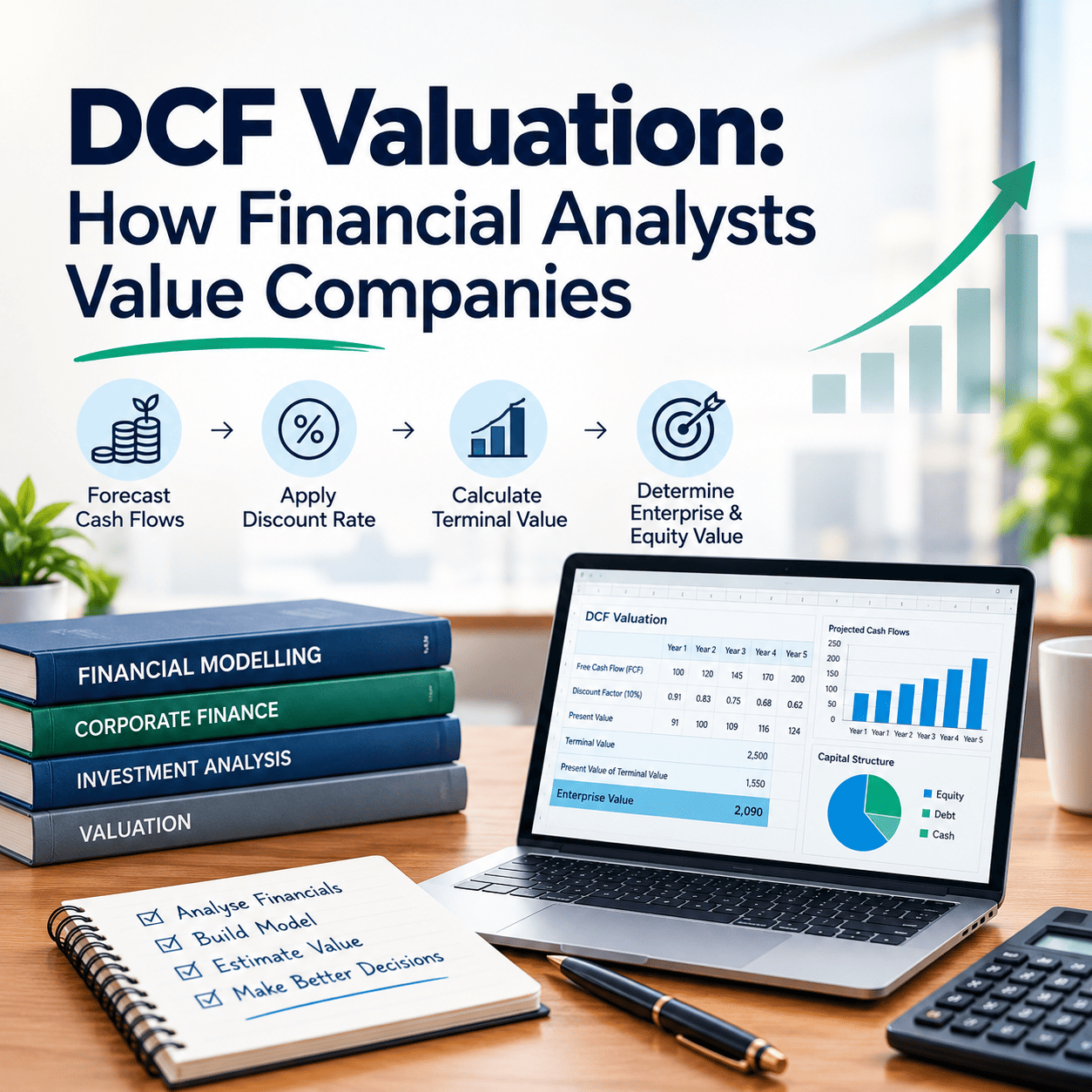
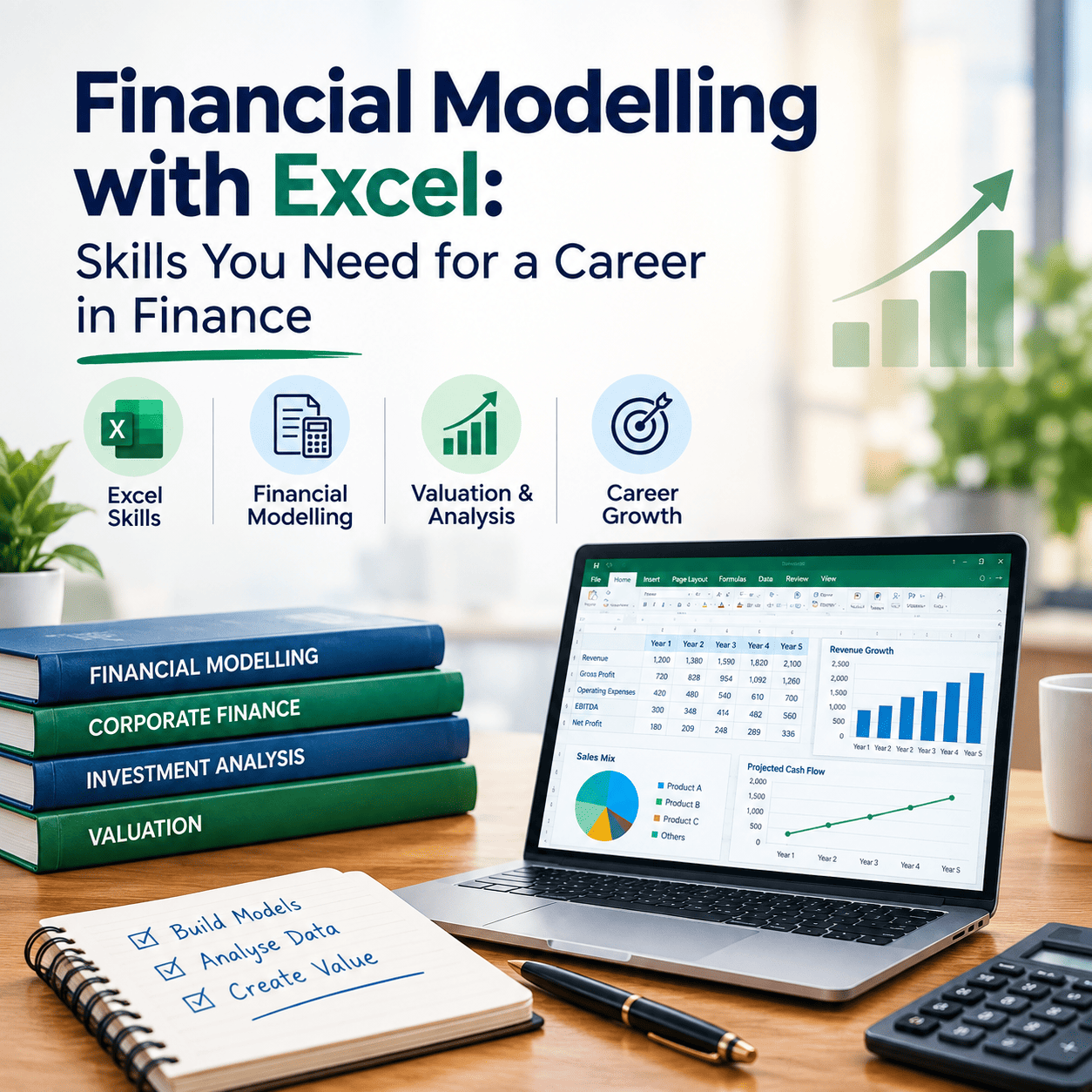
- Financial Modelling
- Economics
- Investment Banking
- Portfolio Construction
- Risk Management
- Financial Regulations
- Behavioural Finance
- Data Analytics
For example, a technical analyst may identify a buying opportunity using chart patterns. However, an investment manager must also evaluate company fundamentals, macroeconomic conditions, sector performance, valuation metrics, and portfolio allocation before making an investment decision.
This integrated approach is what distinguishes industry-ready professionals from individuals with only theoretical knowledge.
Career Opportunities in Financial Markets
The finance industry offers diverse career paths for graduates who possess strong analytical and practical skills.
Some of the most sought-after roles include:
Equity Research Analyst
Analyse listed companies, prepare research reports, and provide investment recommendations.
Investment Banking Analyst
Support mergers, acquisitions, IPOs, fundraising, and corporate financial advisory.
Portfolio Manager
Manage investment portfolios across equities, debt instruments, mutual funds, and alternative investments.
Technical Analyst
Interpret price charts, identify trading opportunities, and provide market insights using technical indicators.
Risk Analyst
Evaluate financial risks and develop strategies for managing market, credit, and operational risks.
Financial Consultant
Advise individuals and businesses on investments, wealth creation, and financial planning.
Derivatives Analyst
Work with futures, options, and other derivative products for trading and risk management.
Wealth Manager
Help clients build diversified investment portfolios aligned with their financial goals.
Market Research Analyst
Study industry trends, economic developments, and investment opportunities to support business decisions.
With increasing digitisation and global integration, demand for professionals skilled in the financial market continues to grow across banks, brokerage firms, investment companies, fintech organisations, asset management companies, and consulting firms.
What Makes a Top Stock Market Course?
Choosing the top stock market course is about much more than learning trading strategies.
An industry-relevant financial market course should provide:
- Comprehensive curriculum covering multiple financial domains
- Practical exposure through live market applications
- Industry-led faculty
- Bloomberg and market terminal exposure
- Technical and Fundamental Analysis
- Financial Modelling
- Investment Banking concepts
- Capital Market operations
- AI and technology integration
- Internship opportunities
- Placement assistance
The right stock market institute prepares students not only to understand markets but also to succeed in professional finance careers.
Why Professional Education Matters
Self-learning through books and online videos is valuable, but structured professional education accelerates learning by combining theory with real-world application.
Professional education helps students:
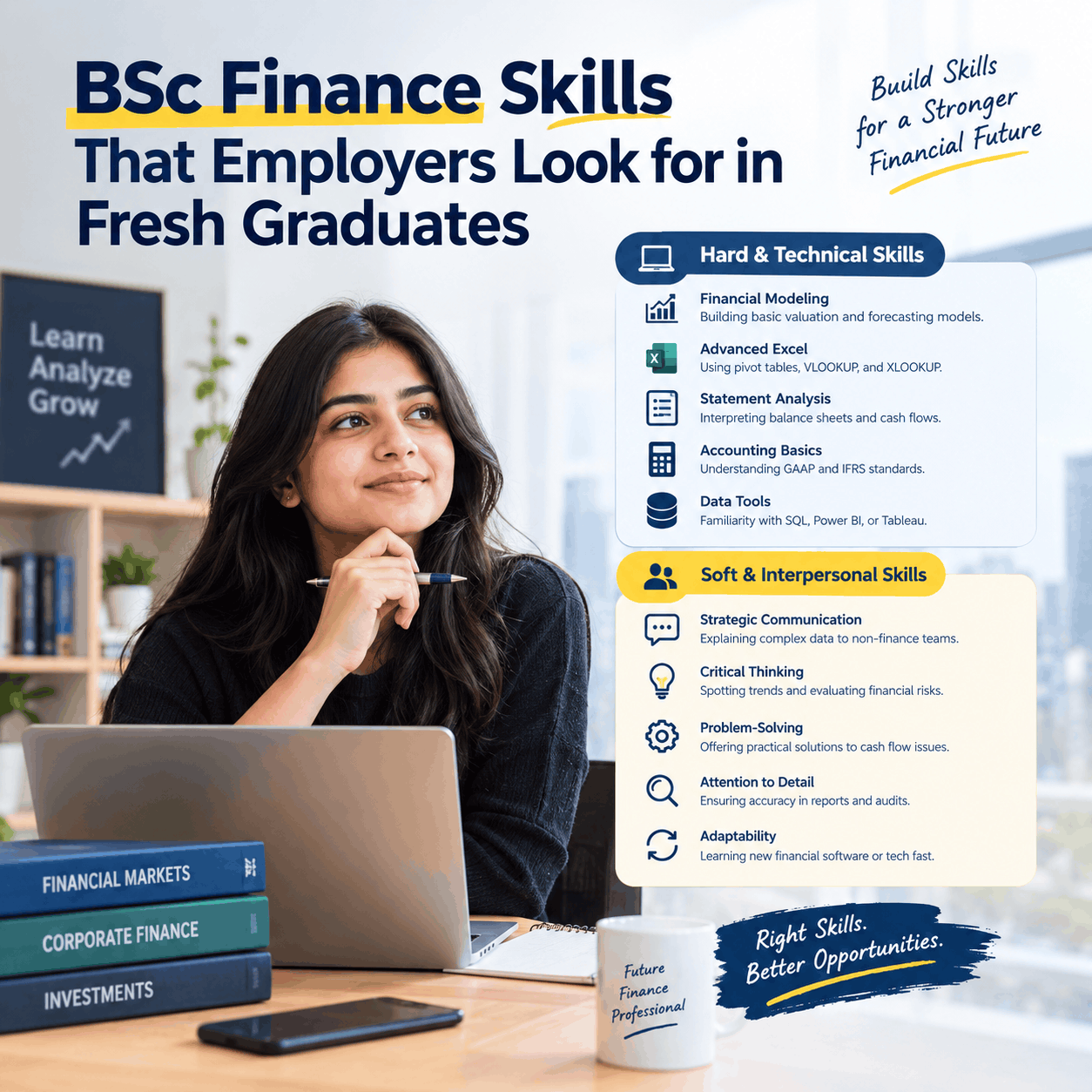
- Develop industry-ready skills
- Learn from experienced practitioners
- Apply concepts using live market examples
- Build professional networks
- Improve communication and analytical abilities
- Gain recognised qualifications
- Enhance employability
Recruiters increasingly prefer candidates with practical experience in addition to academic credentials.
As financial markets become more technology-driven, professionals also need exposure to Artificial Intelligence, financial analytics, and data-driven decision-making. FinX Institute has incorporated practical learning and industry-oriented training into several of its programmes, including technical analysis and global financial market education.
FinX Institute MMS in Global Financial Markets: Your Career Roadmap
If your goal is to build a long-term career in the global financial market, the Master in Management Studies (MMS) in Global Financial Markets at FinX Institute (formerly BSE Institute) provides a structured pathway from classroom learning to industry readiness.
The programme combines academic excellence with practical market exposure, helping students build expertise across key areas of finance.
Designed in alignment with evolving industry requirements, the MMS programme provides learners with the skills required to compete in today's dynamic financial ecosystem.
Conclusion
Every successful finance professional begins with a strong foundation. Technical Analysis develops the ability to understand market behaviour, but lasting success in the global financial market requires broader financial knowledge, analytical thinking, practical exposure, and continuous learning.
Choosing the right financial market course can significantly influence your career trajectory. A professionally designed programme equips you with the technical expertise, business understanding, and industry exposure needed to thrive in today's competitive financial landscape.
FinX Institute (formerly BSE Institute), with its industry-oriented curriculum, experienced faculty, practical learning methodology, and focus on employability, offers aspiring finance professionals an opportunity to build a rewarding career in the evolving financial market. Whether your ambition is investment banking, equity research, portfolio management, or financial consulting, the right education can become the roadmap that transforms learning into leadership.
Visit: finxinstitute.com
Call: 1800 892 9030
Email: Finxinstitute Training