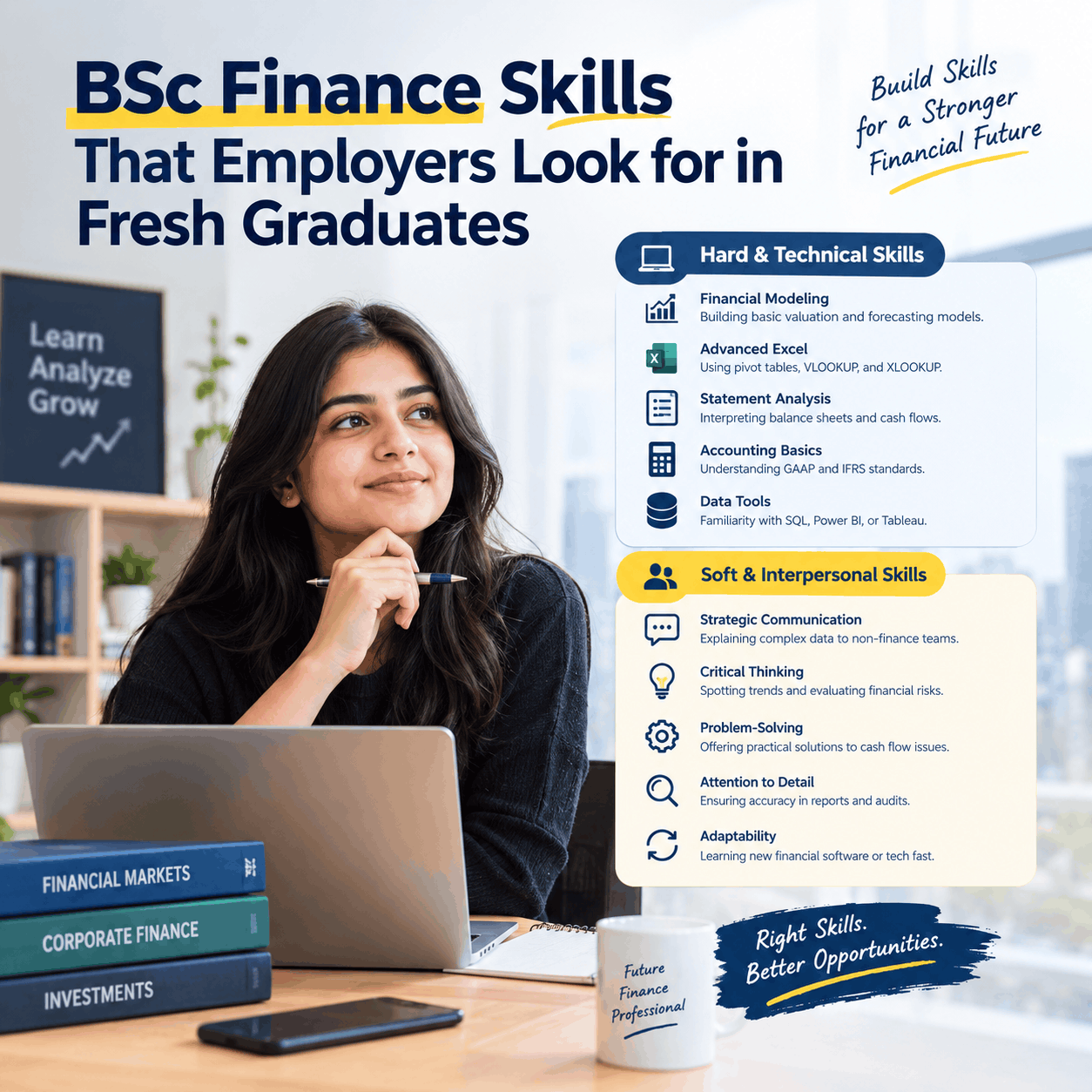
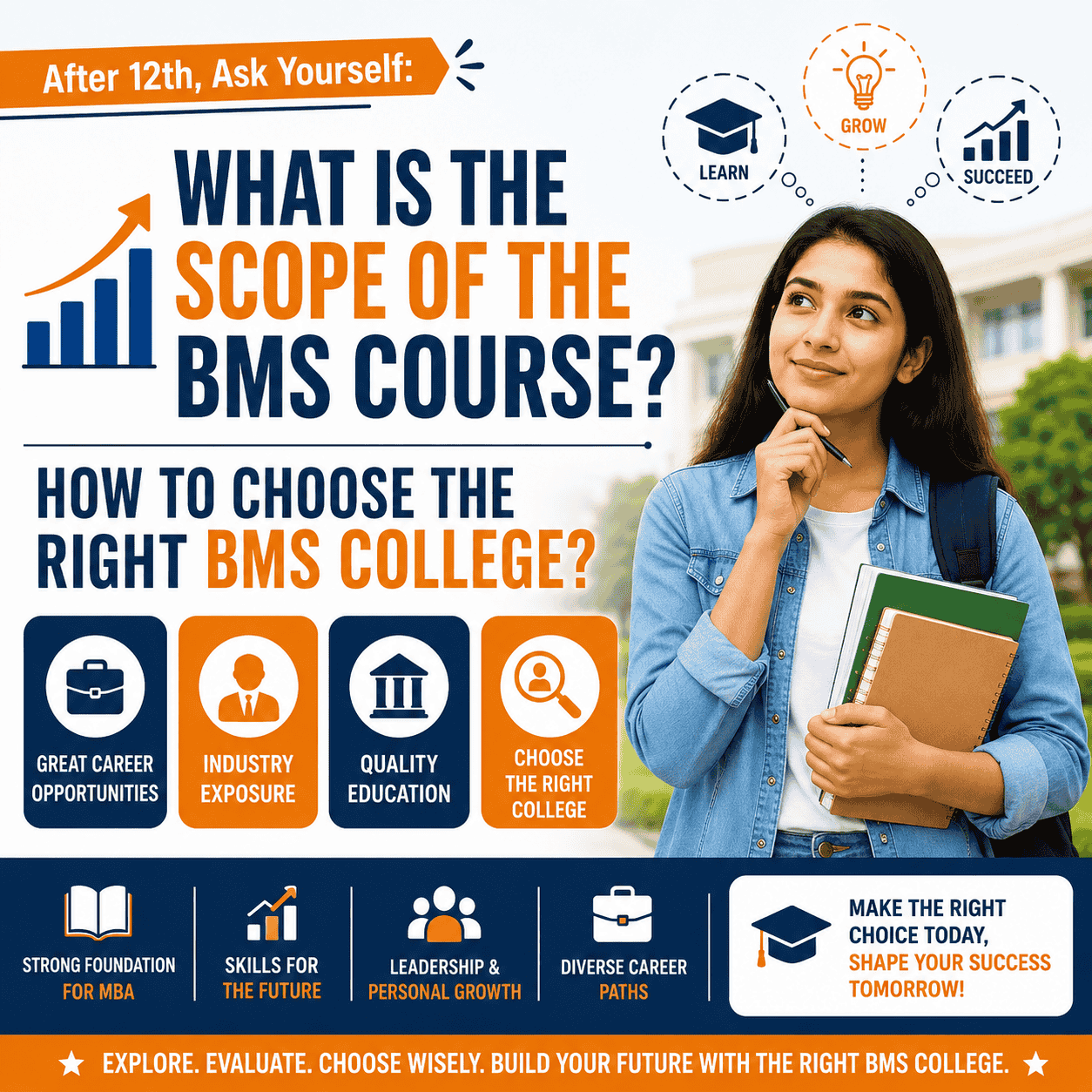
Choosing the right undergraduate program after Class 12 is one of the most important decisions for students planning a career in business, management, or finance. While many students explore courses like B.Com and BBA, the BMS course (Bachelor of Management Studies) has become an increasingly popular choice due to its industry-focused curriculum and diverse career opportunities.
Along with understanding the course, students also spend considerable time comparing different BMS colleges based on factors such as curriculum, faculty, industry exposure, placements, and specialization options. Choosing the right college is just as important as choosing the right degree because it influences the skills, practical experience, and career opportunities students gain during their undergraduate years.
Whether your goal is to build a career in finance, banking, consulting, marketing, entrepreneurship, or capital markets, this guide will help you understand everything about the BMS course, from eligibility and subjects to career opportunities and how to choose the right BMS college.
What is a BMS Course?
The Bachelor of Management Studies (BMS) is an undergraduate management degree that equips students with the knowledge and skills required to understand how businesses operate and how organizations make strategic decisions.
Unlike conventional business degrees that focus primarily on theory, a well-designed BMS course combines classroom learning with practical applications through case studies, presentations, projects, internships, and industry interaction.
The program focuses on developing:
- Business management fundamentals
- Leadership and communication skills
- Critical thinking and decision-making
- Financial and analytical capabilities
- Teamwork and problem-solving skills
Today, many universities offer the BMS degree under the National Education Policy (NEP), providing students with greater academic flexibility, multidisciplinary learning, and an option to pursue either a three-year degree or a four-year honours program.
Why is the BMS Course Popular After 12th?
The BMS course has gained popularity because businesses today require graduates who can understand both management principles and the practical realities of modern organizations.
Students from Commerce, Science, and Arts backgrounds can pursue the program, subject to university eligibility criteria.
Some reasons why students choose BMS include:
- Industry-oriented curriculum
- A wide range of career opportunities
- Strong foundation for MBA and postgraduate education
- Development of leadership and managerial skills
- Exposure to finance, marketing, operations, and entrepreneurship
- Growing opportunities in banking, fintech, consulting, and capital markets
As India's financial and business sectors continue to expand, management graduates with practical skills are increasingly in demand.
BMS Degree: Duration, Eligibility and Admission Process
Duration
A BMS degree is generally offered as:
- Three-Year Undergraduate Degree, or
- Four-Year Honours Degree under the National Education Policy (NEP), depending on the university.
Eligibility
Students must generally have completed their 10+2 education from a recognized board. Most universities accept applications from students belonging to Commerce, Science, and Arts streams, although eligibility criteria may vary.
Admission Process
Admission usually involves:
- Online application
- Merit-based selection or entrance examination (depending on the university)
- Document verification
- Fee payment
Students should always check the admission requirements of their preferred institution before applying.
Bachelor of Management Studies Subject List
The Bachelor of Management Studies subject list is designed to help students understand different aspects of business and management.
First-Year BMS Subjects
Students are introduced to the foundations of business through subjects such as:
- Principles of Management
- Financial Accounting
- Business Economics
- Business Communication
- Business Mathematics
- Organizational Behaviour
- Marketing Fundamentals
- Environmental Studies
- Computer Applications
- Business Statistics
These subjects provide the conceptual base for advanced management learning.
Finance and Capital Markets Subjects in BMS
Students interested in finance benefit from programs that integrate management education with practical financial knowledge.
At FinX Institute (formerly BSE Institute), students are introduced to industry-oriented subjects such as:
- Introduction to Financial Markets
- Fundamental Analysis
- Technical Analysis
- Corporate Finance
- Equity Research
- Portfolio Management
- Mutual Funds
- Derivatives
- Financial Risk Management
- Wealth Management
- Financial Modelling
This practical approach helps students connect classroom concepts with real-world financial markets.
How to Choose the Right BMS College
With numerous BMS colleges available across India, selecting the right institution requires careful evaluation, not just intuition. Rather than focusing solely on rankings, students should consider how well a college prepares them for long-term career success.
Curriculum
The best BMS colleges regularly update their curriculum to reflect current business trends and industry requirements. Look for programs that include finance, analytics, entrepreneurship, digital business, or capital markets.
Industry Exposure
Industry interaction is one of the biggest differentiators among BMS colleges.
Choose institutions that offer:
- Live projects
- Industry workshops
- Corporate visits
- Guest lectures
- Internships
- Case study-based learning
These experiences help students understand how classroom concepts are applied in professional settings.
Faculty
Faculty members with industry experience can provide practical insights alongside academic knowledge, helping students develop a stronger understanding of business concepts.
Placement Support
When comparing BMS colleges, students should review the institute's placement support, internship opportunities, career guidance services, and industry connections.
Skill Development
The best management education extends beyond textbooks. Look for colleges that emphasize communication skills, analytical thinking, teamwork, leadership, and professional development alongside academics.
BMS Course Scope in India
The scope of the BMS course continues to grow as organizations across industries seek graduates with management and business skills.
Some of the major industries recruiting BMS graduates include:
Banking
Private banks, public sector banks, and financial institutions hire graduates for operational, sales, relationship management, and analytical roles.
Financial Services
The financial services sector offers opportunities in wealth management, investment advisory, securities operations, mutual funds, insurance, and financial planning.
Capital Markets
India's growing capital markets have created demand for professionals in:
- Equity Research
- Investment Analysis
- Portfolio Management
- Securities Operations
- Financial Risk Management
Consulting
Business consulting firms recruit management graduates for research, operations, strategy support, and client management roles.
FinTech
Digital financial services continue to create new opportunities in:
- Digital Payments
- WealthTech
- Lending Platforms
- Investment Technology
- Financial Analytics
Career Options After BMS Course
Graduates can pursue careers in multiple industries depending on their specialization and interests.
Some popular career options include:
- Investment Analyst
- Equity Research Analyst
- Stock Market Professional
- Portfolio Management Executive
- Financial Consultant
- Wealth Management Associate
- Business Development Executive
- Marketing Executive
- Operations Executive
- FinTech Analyst
Many graduates also pursue postgraduate programs such as an MBA, PGDM, or professional certifications to strengthen their career prospects.
Why FinX Institute is a Strong Choice Among BMS Colleges
Selecting the right college is an important step in shaping a successful career. While comparing BMS colleges, students should look beyond the degree itself and evaluate how effectively an institution prepares them for the industry.
FinX Institute (formerly BSE Institute) offers a BMS in Capital Markets that combines management education with specialized learning of the financial market. This benefits students from an industry-oriented curriculum designed to bridge academic concepts with practical application.
Some key highlights include:
University of Mumbai Affiliation
The BMS in Capital Markets program is affiliated with the University of Mumbai, one of India's leading public universities. Students receive a university-recognized degree while gaining exposure to a curriculum that integrates management education with capital markets and financial services, helping them build both academic credentials and industry-relevant skills.
Industry-Aligned Curriculum
The program integrates core management education with specialized learning in financial markets and capital markets.
Practical Learning
Students gain exposure through:
- Case studies
- Market simulations
- Live projects
- Financial research
- Industry assignments
Experienced Faculty
Learning is guided by faculty members and industry professionals with experience in finance, capital markets, and business management.
Career-Focused Approach
The curriculum helps students build skills relevant to sectors such as:
- Banking
- Financial Services
- Capital Markets
- FinTech
- Investment Research
- Wealth Management
Holistic Skill Development
Beyond academics, students develop communication, presentation, analytical thinking, leadership, and problem-solving skills that employers value.
For students exploring BMS colleges in Mumbai, choosing an institution that combines academic excellence with practical exposure can make a meaningful difference in career readiness.
Future-focused Questions to Ask Before Choosing a BMS College
Before finalizing your admission, consider asking:
- Does the curriculum align with current industry requirements?
- Are internships or live projects part of the program?
- What specialization options are available?
- Does the college provide placement assistance?
- Are there opportunities to learn from industry professionals?
- Does the program emphasize practical learning alongside academics?
- Is the curriculum aligned with the National Education Policy (NEP)?
Asking these questions can help you make a more informed decision while comparing different BMS colleges.
Frequently Asked Questions
What is a BMS course?
A BMS course is an undergraduate management degree that develops business, leadership, finance, and managerial skills through a combination of academic and practical learning.
Who is eligible for a BMS degree?
Students who have completed Class 12 from a recognized board are generally eligible. Commerce, Science, and Arts students can apply, depending on the university's admission criteria.
What are the major Bachelor of Management Studies subjects?
Common subjects include Principles of Management, Financial Accounting, Business Economics, Marketing, Organizational Behaviour, Business Communication, and specialized finance subjects in select programs.
What is the scope of the BMS course?
The BMS course offers career opportunities across banking, financial services, consulting, marketing, operations, fintech, entrepreneurship, and capital markets.
What should students consider while comparing BMS colleges?
Students should evaluate the curriculum, faculty expertise, practical learning opportunities, internships, placement support, industry exposure, specialization options, and overall career development opportunities.
Conclusion
A BMS course offers students a strong foundation in business management while preparing them for diverse careers in finance, consulting, banking, marketing, entrepreneurship, and emerging industries. However, earning the degree is only part of the journey. Equally important is choosing among the many BMS colleges based on factors such as curriculum quality, industry exposure, faculty expertise, practical learning opportunities, and career support.
For students who aspire to build a career in finance and capital markets, selecting a program that combines academic knowledge with hands-on industry learning can provide a significant advantage. The BMS in Capital Markets at FinX Institute (formerly BSE Institute) is designed with this approach, helping students develop the technical knowledge, practical skills, and professional competencies required to succeed in today's evolving business landscape.